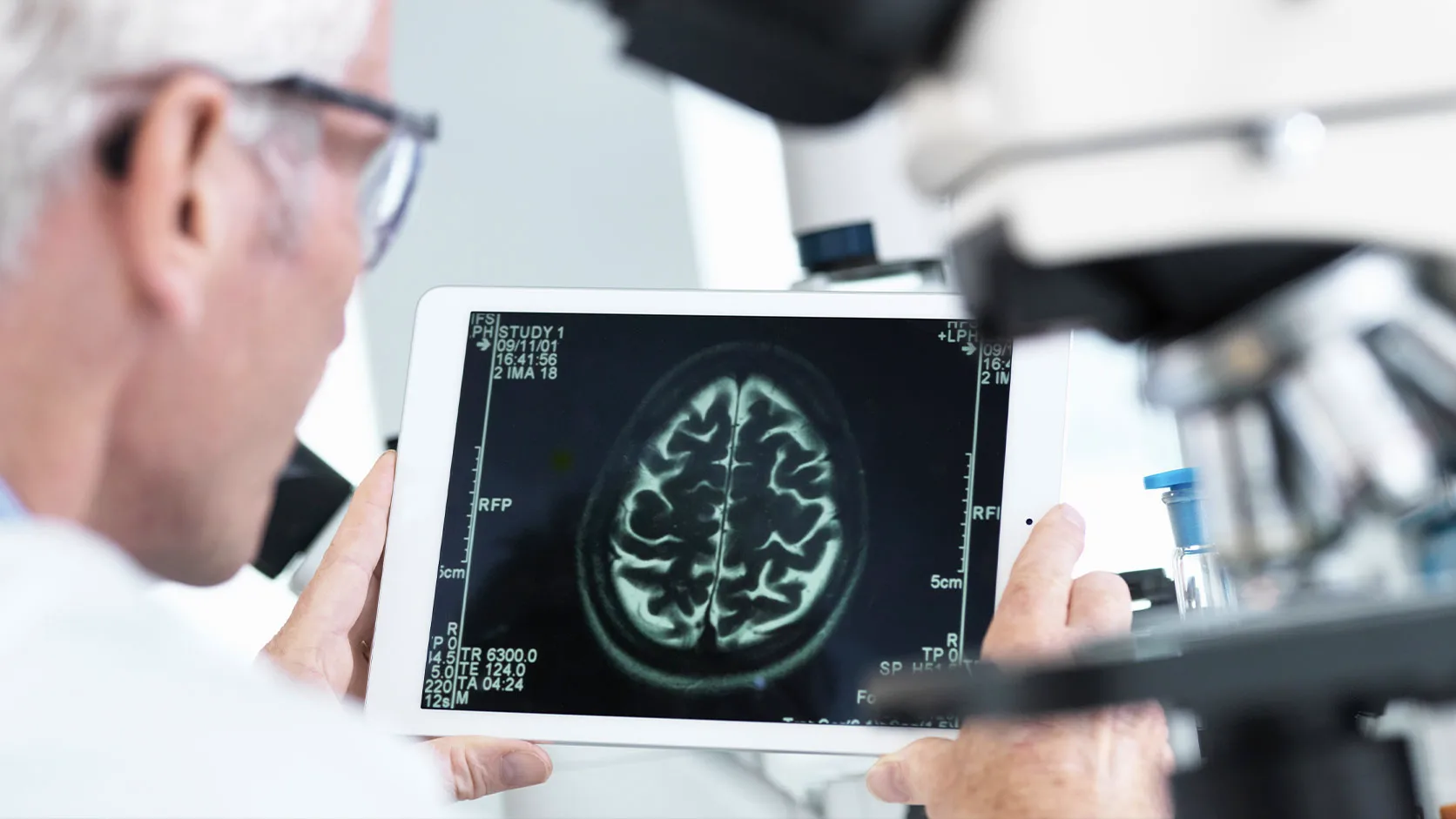
AxCellerate supports neurodegenerative disease modelling with human-relevant Brain-on-Chip models for preclinical neuroscience research.
Neurodegenerative diseases are among the most challenging areas of neuroscience research. Conditions such as Alzheimer’s disease, Parkinson’s disease and other CNS-related disorders involve complex biological mechanisms that are difficult to reproduce with conventional preclinical models.
Traditional systems can provide useful insights, but they often have limited ability to reflect the structure, activity and functional dynamics of human neuronal networks. This can reduce the translational relevance of early-stage research and make it harder to understand disease progression, target biology or compound response.
AxCellerate supports neurodegenerative disease modelling through Brain-on-Chip technology and three-dimensional human-derived neuronal models. The platform is designed to help research teams investigate disease-related mechanisms, observe neuronal activity and generate preclinical evidence in a more human-relevant experimental environment.
AxCellerate’s Brain-on-Chip platform enables the study of neuronal function and disease-related responses in advanced three-dimensional models.
The technology can help by providing:
Three-dimensional human-derived neuronal systems support the investigation of mechanisms that are more closely connected to human neurobiology.
Electrophysiological recording capabilities allow researchers to observe neuronal network activity and functional changes in disease-relevant models.
The platform can help investigate biological processes associated with neurodegenerative conditions and CNS-related disorders.
Candidate compounds can be tested in disease-relevant contexts to explore potential biological effects and support early preclinical decisions.
Potential therapeutic targets can be assessed in a more relevant neuronal environment, helping teams evaluate their biological significance.
When suitable models are available, AxCellerate can support research focused on specific mutations, biological profiles or personalized disease mechanisms.
Advantages
AxCellerate provides a specialized approach for organizations working on complex neurological and neurodegenerative conditions.
By integrating Brain-on-Chip technology into neurodegenerative disease research, AxCellerate helps research teams generate more relevant evidence and strengthen early-stage decision-making.